Flat Roof Ready for Solar Installation
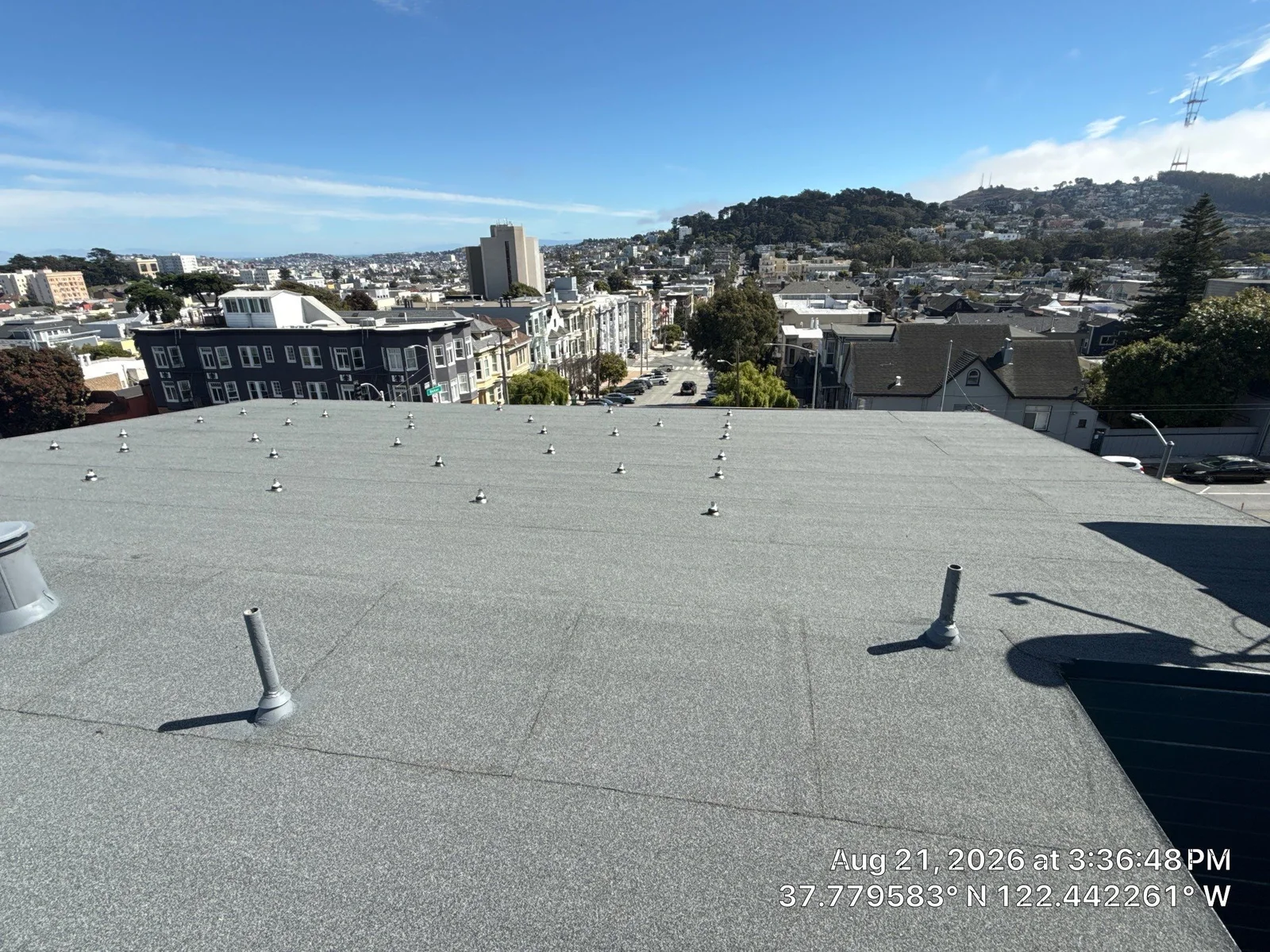
Image for a ROOF EXPRESS Field Note about flat-roofing service for San Francisco, California.
This image accompanies a ROOF EXPRESS Field Note about flat-roofing service for San Francisco, California. It is part of our collection of roofing guides and field notes.
Why Roofing Should Come First Installing solar panels is a major investment, but before mounting a new solar system on a flat roof, homeowners should make sure the roofing system underneath is ready.
A solar installation can remain on a roof for many years. If the roof begins leaking or needs replacement shortly after the solar panels are installed, the panels may need to be removed and reinstalled before the roofing work can be completed.
That can create additional cost, scheduling delays, and unnecessary disruption.
This is why it is often better to inspect, repair, or replace an aging flat roof before solar installation begins.
At Roof Express, we help homeowners prepare flat and low-slope roofs for future solar installation by addressing waterproofing, roof decking, drainage, flashing, penetrations, and other roofing conditions before solar equipment is mounted. Why the Roof Should Be Evaluated Before Solar Installation Solar panels do not replace your roofing system.
They are installed above it.
The roof underneath still needs to provide dependable waterproof protection for the building.
Before solar installation, the roof should be evaluated for:
Existing leaks
Open seams
Cracked roofing membranes
Blisters or bubbles
Ponding water
Damaged flashing
Soft roof decking
Deteriorated drains
Previous temporary repairs
Failed roof-to-wall transitions
Aging roofing materials
If the roofing system is already approaching the end of its useful life, replacing it before solar installation may be the better long-term decision. Why Replacing the Roof After Solar Can Be More Complicated Once solar panels and mounting equipment are installed, access to the roofing system becomes more difficult.
If the roof later needs major repairs or replacement, the project may involve:
Disconnecting the solar system
Removing the solar panels
Removing or modifying mounting equipment
Completing the roofing work
Reinstalling the solar equipment
Reconnecting and testing the solar system
This can add additional labor and coordination to a project that could have been avoided by addressing the roof first. Flat Roof Replacement Before Solar Installation When an existing flat roof is aging or deteriorated, a complete replacement before solar installation creates a fresh roofing foundation.
The process may include:
Removing the existing roofing
Inspecting the roof deck
Replacing deteriorated plywood
Evaluating drainage
Installing a new roofing assembly
Rebuilding flashing details
Waterproofing roof penetrations
Completing the finished roof
Allowing the solar contractor to install equipment over the new system
This provides the solar installer with a new and properly prepared roofing surface. Modified Bitumen Roofing for Solar-Ready Flat Roofs Modified bitumen is one of the roofing systems commonly used for flat and low-slope roofs.
For appropriate properties, a multi-layer modified bitumen roofing assembly can provide a strong waterproofing foundation before solar installation.
A typical 3-layer system may include:
Layer 1 — Base Sheet
Layer 2 — Modified Bitumen Interply
Layer 3 — Granulated Modified Bitumen Cap Sheet
Each layer adds protection to the complete roofing assembly.
A new multi-ply roofing system can be especially valuable before solar equipment is installed because future access to some roof areas may become limited. Roof Deck Inspection Before Solar The roof deck is one of the most important parts of the roofing system.
Unfortunately, homeowners often cannot see the condition of the plywood underneath an existing roof.
During a complete tear-off, the roof deck can be inspected for:
Rotten plywood
Water damage
Delamination
Dry rot
Soft areas
Previous improper repairs
Structural deterioration
Solar mounting equipment should not be installed without considering the condition of the underlying roof structure.
- ●Any damaged decking should be addressed before the new roofing and solar systems are installed.
- ●Flat Roof Drainage and Solar Panels
- ●Drainage should also be evaluated before solar installation.
Solar panels, racking, conduit, and other equipment can make future maintenance around drains more difficult.
The roof should be designed so water can continue moving toward:
Roof drains
Scuppers
Gutters
Downspouts
Existing ponding areas should be identified before the solar installation begins.
Installing solar panels over a roof with a major drainage problem does not correct the underlying condition.
When appropriate, drainage improvements may involve:
Tapered materials
Crickets
Slope improvements
Drain modifications
New sheathing
Scupper improvements
Keep Roof Drains Accessible One important consideration when planning solar equipment is maintaining access to roof drains and scuppers.
Solar panels should not create unnecessary obstructions around critical drainage areas.
Homeowners should be able to inspect and clean these locations after installation.
Blocked drainage can lead to standing water and unnecessary stress on the roofing system.
Coordination between the roofing contractor and solar contractor can help avoid these problems. Solar Mounting Penetrations Must Be Waterproofed Depending on the solar mounting system, the installation may create penetrations through the roofing assembly.
Every penetration is a potential leak location if it is not properly waterproofed.
Solar mounting areas may require careful coordination between:
The solar contractor
The roofing contractor
The equipment manufacturer
Roof penetrations should be properly flashed and integrated into the roofing system rather than relying only on surface sealant. Avoid Unnecessary Roof Penetrations Whenever possible, the solar layout should minimize unnecessary penetrations through the roofing membrane.
The exact mounting system depends on the roof, structural requirements, solar equipment, and engineering specifications.
Some systems may use penetrations while others may use different mounting approaches.
Regardless of the system, the roofing contractor should understand where equipment will be installed so waterproofing concerns can be addressed before final installation. Protecting a New Roof During Solar Installation A newly installed flat roof can be damaged if other contractors are not careful while working on it.
Potential problems include:
Dropped tools
Sharp equipment
Dragging solar panels
Excessive foot traffic
Cutting the membrane
Improperly placed mounting equipment
New penetrations
Damage around roof edges
Solar installers should use appropriate protection when working over a new roofing membrane.
After solar installation, it can also be beneficial to have the roof inspected for accidental damage. Roofing Warranty and Solar Installation Homeowners should discuss roofing warranties before solar equipment is installed.
Some roofing warranties may contain requirements related to:
New roof penetrations
Third-party work
Modifications to the roofing system
Solar mounting systems
Flashing
Repairs
Before solar installation, ask your roofing contractor whether any additional steps are necessary to protect the roofing workmanship or manufacturer warranty. Solar Panels and Future Roof Maintenance Even after solar panels are installed, the roof still needs periodic maintenance.
Flat roof maintenance may include:
Cleaning drains
Removing debris
Inspecting flashing
Checking roof penetrations
Monitoring seams
Inspecting skylights
Checking parapet walls
Looking for membrane damage
Monitoring areas beneath or around solar equipment
Solar equipment should be positioned so important roofing components remain reasonably accessible whenever practical. Skylights and Solar Planning Many flat roofs contain skylights.
Solar panels should be planned carefully around skylights to maintain appropriate access and avoid interfering with:
Skylight flashing
Drainage
Future replacement
Maintenance
Emergency access where applicable
If an older skylight is already deteriorated, replacing it before the solar equipment is installed may prevent additional work later. Parapet Walls and Solar Equipment Many flat roofs also contain parapet walls.
These areas often contain important waterproofing transitions.
Before installing solar panels, check for:
Deteriorated wall flashing
Damaged coping
Cracked roofing membrane
Failed sealant
Water intrusion
Loose metal components
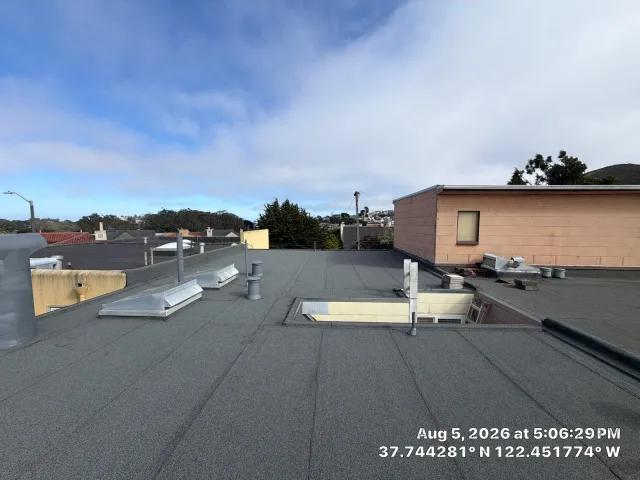
Roofing problems at parapet walls should be addressed before solar equipment makes future access more difficult. Flat Roof Ready for Solar Installation A solar-ready roof should provide more than a clean-looking surface.
Before solar installation, the roof should ideally have:
Sound roof decking
Reliable waterproofing
Properly installed roofing membranes
Functional drainage
Clear roof drains
Proper flashing
Watertight penetrations
Secure roof edges
Good access for maintenance
No active leaks
- ●The goal is to give the solar system a dependable roofing foundation.
- ●Should You Replace Your Flat Roof Before Installing Solar?
- ●You should strongly consider roof replacement before solar installation when:
The existing roof is old
The roof has recurring leaks
Multiple patches are present
Seams are deteriorated
Membrane cracking is widespread
Roof decking is damaged
Ponding water is significant
The roofing system may need replacement within the next several years
If the roof is relatively new and remains in excellent condition, complete replacement may not be necessary.
- ●A professional roof inspection can help determine the best option.
- ●Roof Repair Before Solar Installation
- ●Some roofs do not require complete replacement.
If the existing roofing system remains in good condition, repairs may be sufficient.
Repair work before solar may include:
Flashing repair
Seam repair
Penetration waterproofing
Drain repairs
Roof-to-wall repairs
Minor membrane repairs
Skylight flashing repairs
The decision should be based on the overall condition of the roofing system, not just one visible problem. Coordinate the Roofer and Solar Contractor Communication between the roofing contractor and solar installer is extremely important.
Before installation begins, both contractors should understand:
Solar panel locations
Mounting locations
Roof penetrations
Conduit routing
Drain locations
Skylight locations
Roofing warranty requirements
Areas requiring protection
Good coordination can reduce unnecessary roof damage and help create a cleaner final installation. Why Install a New Roof Before Solar? Replacing an aging roof before solar installation can provide several advantages.
Avoid Future Solar Removal A new roof reduces the likelihood that panels will need to be removed soon for reroofing. Inspect Concealed Decking Tear-off gives the contractor an opportunity to inspect the roof deck. Improve Waterproofing Old roofing, flashing, and deteriorated details can be replaced before solar equipment is installed.
Address Drainage Ponding and drainage problems can be evaluated before panel placement. Better Solar Planning The solar system can be designed around the finished roof rather than an aging roofing system. Easier Long-Term Maintenance Critical roof areas can be kept accessible for future inspections and cleaning.
Professional Flat Roofing Before Solar Installation At Roof Express, we help property owners prepare flat roofs before installing solar systems.
Our roofing services include:
Flat roof replacement
Modified bitumen roofing
3-layer roofing systems
Torch-down roofing
Low-slope roof replacement
Roof repair
Roof deck replacement
Drainage improvements
Roof flashing
Skylight work
Parapet waterproofing
Roof inspections
Our goal is to create a dependable roofing system that can support the long-term needs of the property before solar equipment is installed. Planning to Install Solar? Inspect Your Roof First If you are planning a solar installation, do not overlook the roofing system underneath it.
A professional roof inspection before solar installation can help identify problems while the roof is still fully accessible.
Addressing roofing issues first can help reduce the likelihood of removing solar equipment later for unexpected roof repairs or replacement.
Contact Roof Express today to schedule a flat roof inspection and make sure your roof is ready for solar installation. Frequently Asked QuestionsShould I replace my roof before installing solar panels? If the roof is approaching the end of its useful life or already has significant deterioration, replacing it before solar installation can avoid the cost and inconvenience of removing the solar equipment later.
Can solar panels be installed on a flat roof? Yes. Solar systems are commonly installed on flat and low-slope roofs.
The mounting system and layout should be designed for the specific building and roof conditions. Can solar panels damage a flat roof? Improper installation, excessive foot traffic, dropped equipment, or poorly waterproofed penetrations can damage a roofing membrane.
Proper installation and coordination help reduce this risk. Does a flat roof need to be replaced before solar installation? Not always.
A newer roof in good condition may only require inspection. An older or deteriorated roofing system may be better replaced before panels are installed. What roofing system is good under solar panels?
Several flat roofing systems can work with solar equipment. Modified bitumen is one common option. The correct system depends on the building, roof slope, substrate, drainage, solar mounting method, and applicable requirements.
Should solar installers penetrate the roofing membrane? Some mounting systems require roof penetrations while others use different methods. Any required penetration should be professionally flashed and waterproofed according to the roofing and solar system requirements.
What happens if the roof leaks after solar installation? The source of the leak must first be identified. Repairs can become more complicated when solar equipment covers the affected area, and panel removal may sometimes be necessary.
Should roof drains remain accessible after solar installation? Yes. Drains and scuppers should remain reasonably accessible for inspection, cleaning, and maintenance.
Can Roof Express inspect my roof before solar installation? Yes. Roof Express can evaluate the existing roofing membrane, decking conditions visible from accessible areas, drainage, flashing, penetrations, skylights, and other roofing details before the solar system is installed.
How do I prepare my flat roof for solar? Start with a professional roof inspection. Address leaks, deteriorated membranes, decking problems, drainage issues, flashing, and aging skylights before the solar installation begins.