El Niño in San Francisco & the Bay Area
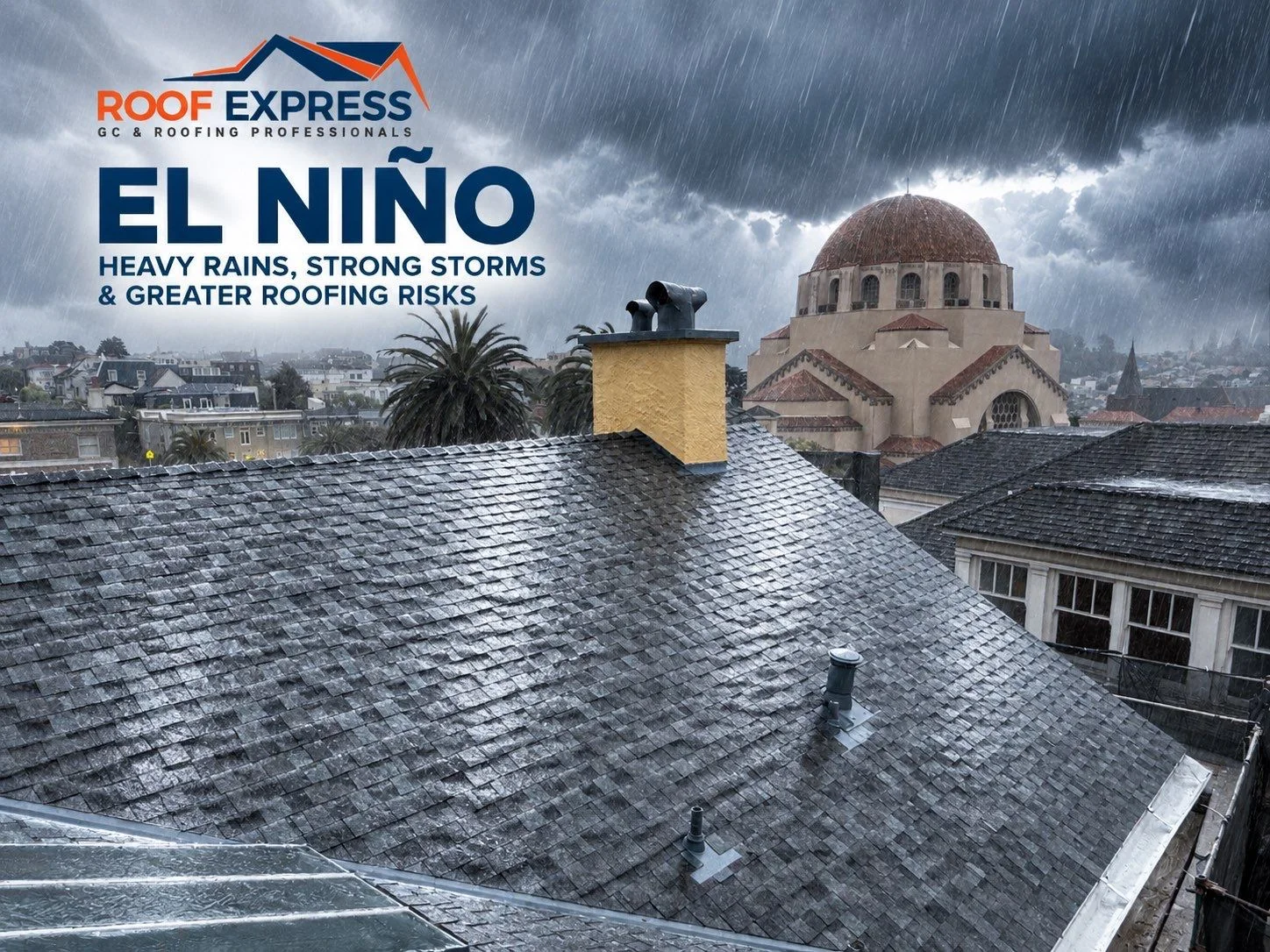
Image for a ROOF EXPRESS Field Note about roofing for San Francisco, California.
This image accompanies a ROOF EXPRESS Field Note about roofing for San Francisco, California. It is part of our collection of roofing guides and field notes.
How Homeowners Can Prepare Their Roof Before Heavy Rain
By Roof Express | San Francisco Bay Area Roofing Professionals
El Niño can bring periods of heavier-than-normal rainfall and powerful Pacific storm systems to California. For homeowners in San Francisco and throughout the Bay Area, prolonged rain can expose roofing problems that may have gone unnoticed during the dry season.
A roof may look perfectly fine from the ground but still have aging flashing, deteriorated sealant, clogged drainage, loose shingles, or small openings around penetrations. Once several days of rain arrive, these minor vulnerabilities can turn into interior leaks and water damage.
Preparing before the rainy season is usually much easier than discovering a roofing problem during a major storm.
What Is El Niño?
El Niño is a climate pattern associated with unusually warm surface waters in the central and eastern tropical Pacific Ocean. It can influence weather patterns around the world.
For California, El Niño does not guarantee that every location will experience extreme rainfall. However, some El Niño winters have been associated with wetter conditions and significant storms in parts of the state.
For Bay Area homeowners, the practical lesson is simple: regardless of the seasonal forecast, your roof and drainage system should be ready before extended periods of winter rain.
Why Bay Area Roofs Can Be Vulnerable During Heavy Rain
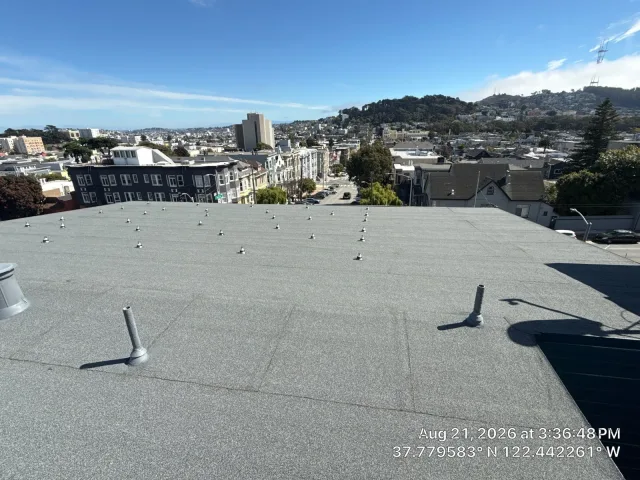
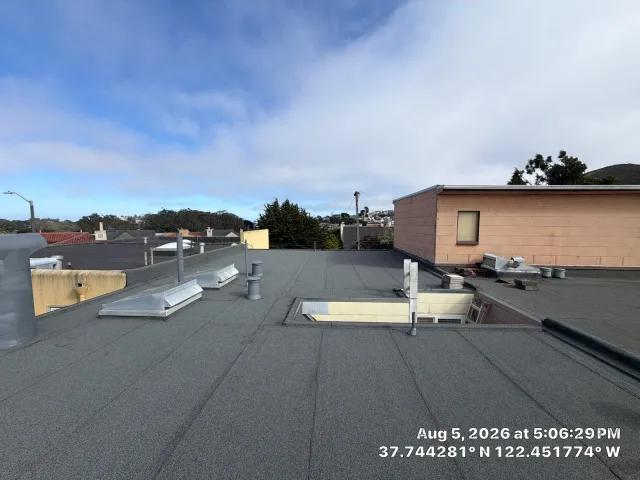
San Francisco and surrounding Bay Area communities contain a wide variety of roofing systems, including asphalt shingles, modified-bitumen low-slope roofs, tile roofs, older built-up roofing systems, skylights, roof decks, and combinations of pitched and flat roofing.
During prolonged rainfall, water can find vulnerabilities around:
Skylights and their flashing
Plumbing vents and pipe penetrations
Chimneys
Roof-to-wall transitions
Valleys
Missing, loose, cracked, or deteriorated shingles
Aging low-slope roofing seams
Roof drains and scuppers
Gutters and downspouts
Previously repaired roofing areas
One short rainstorm may not reveal a problem. Several consecutive days of wind-driven rain can be a very different test.
8 Things Homeowners Should Do Before El Niño or the Rainy Season
1. Schedule a professional roof inspection. Have the roof checked before major storms arrive.
An inspection can identify visible deterioration, damaged shingles, questionable flashing, drainage problems, and other areas that may require maintenance.
2. Clean gutters and downspouts. Leaves and debris can restrict drainage.
When gutters overflow, water can reach fascia boards, siding, windows, foundations, and other areas where it shouldn’t go.
3. Inspect skylights and roof penetrations. Skylights, plumbing vents, exhaust vents, chimneys, and other penetrations deserve particular attention because they interrupt the continuous roofing surface.
4. Check flat and low-slope roof drainage. Standing water can place additional stress on a roofing system.
Roof drains, scuppers, and drainage paths should be clear before heavy rainfall.
5. Address small roofing problems early. A loose shingle, deteriorated flashing detail, or compromised roof penetration may be relatively manageable during dry weather.
Waiting until water is entering the building can make the situation considerably more complicated.
6. Trim problematic vegetation. Tree limbs hanging over a roof can drop leaves into gutters and drains, rub against roofing materials, or become a hazard during strong winds.
Tree work should be performed safely by an appropriate professional.
7. Look inside the attic when accessible. Signs such as staining, damp wood, deteriorated sheathing, or previous water marks can indicate that the roof should receive closer attention.
Do not enter unsafe or difficult-to-access attic areas.
8. Document your roof’s condition. Photos taken before storm season can be useful for maintenance records and for comparing conditions after severe weather.
What Should You Do During an El Niño Storm?
Safety comes first. Homeowners should not climb onto a wet roof during rain or high winds.
If you notice a leak, place a container underneath dripping water when it is safe to do so and move furniture, electronics, and valuables away from the affected area. Photograph visible water damage and note when and where the leak occurred.
If water is near electrical fixtures, outlets, or wiring, avoid contact with the affected area and seek appropriate professional assistance.
Contact a roofing professional to discuss the leak, but understand that certain repairs may need to wait until conditions are safe enough for technicians to access the roof.
Watch for These Warning Signs After Heavy Rain
Once the storm has passed, inspect your property from a safe location. Pay attention to ceiling stains, bubbling paint, damp walls, musty odors, missing shingles, overflowing gutters, damaged flashing, or unexplained moisture in the attic.
A leak may also appear some distance from the actual roof opening. Water can travel along roof decking, framing, pipes, or other building components before becoming visible inside the home. That is one reason accurately diagnosing a roof leak can require a professional inspection.
Don’t Wait for the First Major Storm
Roofing contractors often become much busier once widespread rain begins. Emergency calls increase, working conditions become more difficult, and some repairs cannot safely be completed while a storm is underway.
The best time to prepare is while the roof is dry.
Preventive maintenance cannot guarantee that a home will never experience storm damage, but identifying existing roofing and drainage problems before prolonged rainfall can substantially reduce avoidable risks.
Preparing San Francisco Bay Area Homes for Rain
Roof Express provides roofing inspections, maintenance, repairs, and roof replacement services throughout San Francisco and surrounding Bay Area communities.
Our team works with asphalt shingle roofs, low-slope roofing systems, skylights, gutters, roof penetrations, flashing, and other common residential roofing components.
If your roof hasn’t been inspected recently—or you’ve noticed previous leaks, aging roofing materials, damaged shingles, or drainage problems—consider having it evaluated before the next major series of storms.
Schedule a Roof Inspection Before the Rain
650-666-5554
- ●Roof Express
- ●GC & Roofing Professionals
- ●California CSLB License #1072766
- ●Serving San Francisco and the Bay Area