3-Layer Torch-Down Flat Roof Replacement
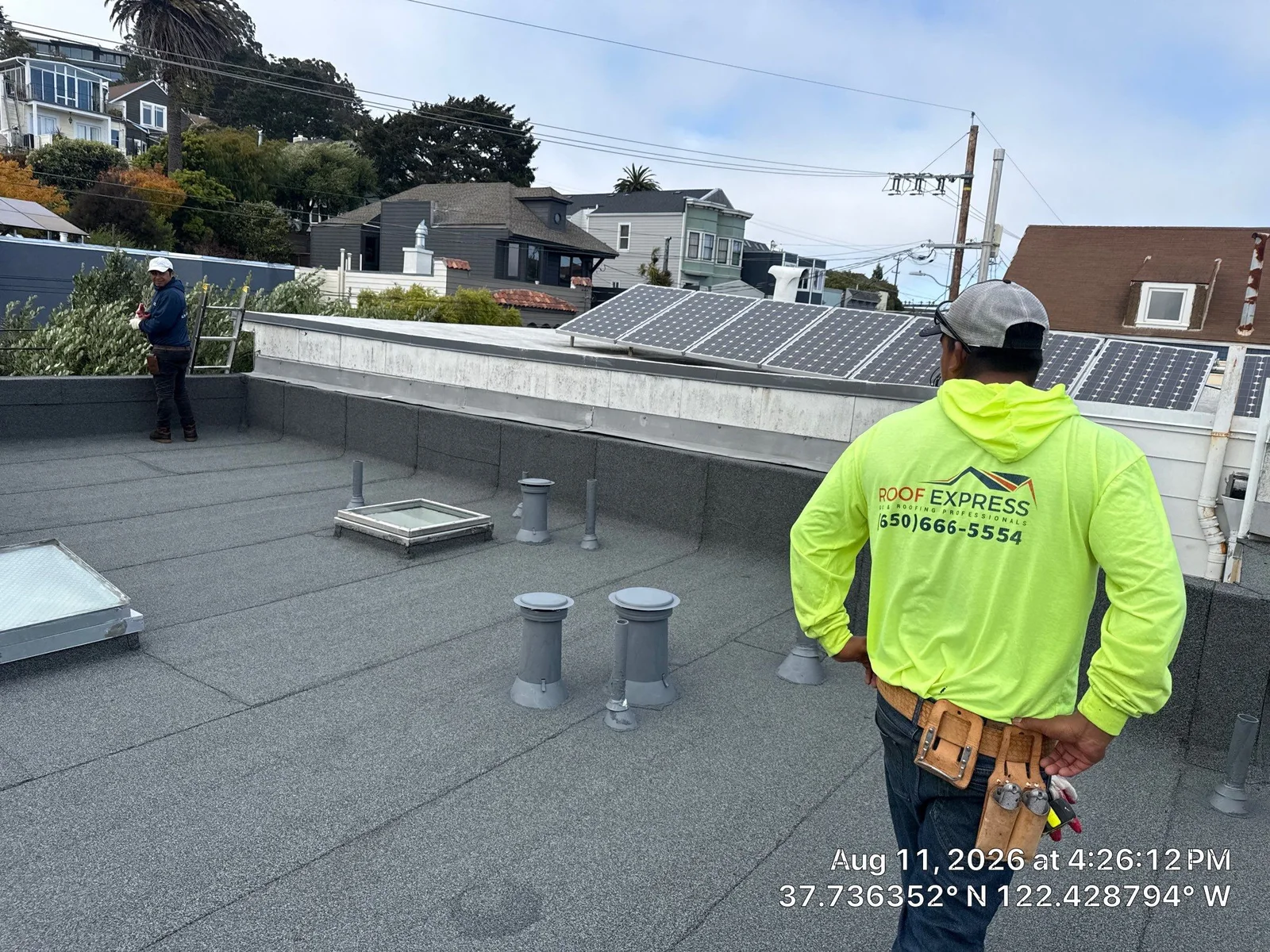
Image for a ROOF EXPRESS Field Note about roof replacement for San Francisco, California.
This image accompanies a ROOF EXPRESS Field Note about roof replacement and flat-roofing service for San Francisco, California. It is part of our collection of roofing guides and field notes.
A Complete Modified Bitumen Roofing System When a flat or low-slope roof begins leaking, developing bubbles, separating at seams, holding water, or showing widespread deterioration, repeated patching may no longer be the best long-term solution.
A complete flat roof replacement with a 3-layer torch-down modified bitumen roofing system can provide a durable, multi-layer waterproofing system designed specifically for low-slope roofing applications.
Roof Express recently completed this type of roofing system using a comprehensive approach that addresses much more than the visible surface of the roof.
From tear-off and roof-deck inspection to new flashing, waterproofing, drainage details, and the final granulated cap sheet, each component plays an important role in the performance of the completed roof.
In this article, we'll explain what a 3-layer torch-down roof is, how the system is built, why it is commonly used on flat roofs, and what homeowners should expect from a professional flat roof replacement. What Is a 3-Layer Torch-Down Roof? A 3-layer torch-down roof is a multi-ply modified bitumen roofing system designed for flat and low-slope roofs.
A typical three-ply assembly can include:
Layer 1 — Base Sheet
Layer 2 — Modified Bitumen Interply or Smooth Membrane
Layer 3 — Granulated Modified Bitumen Cap Sheet
GAF, for example, publishes three-ply APP modified-bitumen assemblies consisting of a base sheet, interply, and cap membrane.
Together, these layers create a reinforced roofing assembly rather than relying on a single membrane for waterproofing.
The exact products and attachment methods should always be selected according to the roof design, substrate, manufacturer requirements, applicable building codes, and project conditions. Why Use Modified Bitumen on a Flat Roof? Flat and low-slope roofs behave differently from steep pitched roofs.
On a steep roof, gravity moves rainwater toward the gutters relatively quickly.
On a low-slope roof, water drains more slowly. That makes waterproofing, seams, flashing, penetrations, and drainage especially important.
Modified bitumen roofing systems are specifically designed for low-slope applications. Manufacturers including CertainTeed and GAF identify modified-bitumen systems as options for residential and commercial low-slope roofing.
A properly selected multi-layer modified bitumen system can provide:
Strong waterproofing
Multiple layers of protection
Reinforced roofing membranes
Resistance to normal roof movement
Protection against sun and weather exposure
Durable seams
Protection around penetrations
A finished granulated surface
Long-term performance when correctly installed and maintained
Our Flat Roof Replacement Process A quality flat roof replacement starts long before the final cap sheet is installed.
The condition underneath the existing roofing is equally important.
Here is how a professional 3-layer torch-down roof replacement is approached. 1. Existing Flat Roof Inspection Before beginning the project, the existing roofing system should be carefully evaluated.
The inspection may identify problems including:
Active roof leaks
Open seams
Bubbles or blisters
Cracked roofing membranes
Ponding water
Failed flashing
Deteriorated roof edges
Damaged drain areas
Previous roofing patches
Soft roof decking
Deterioration around skylights
Problems around plumbing vents
Roof-to-wall leakage
Understanding the existing problems helps determine the appropriate replacement scope. 2. Complete Tear-Off of Existing Roofing For a complete roof replacement, the deteriorated roofing materials are removed from the areas included in the project.
A tear-off may include removing:
Existing roofing membranes
Old cap sheets
Underlying roofing layers
Loose roofing materials
Deteriorated flashing
Damaged accessories
Roofing debris
Removing the old roof exposes the underlying deck so its condition can be evaluated.
This is one of the biggest advantages of a complete tear-off compared with simply installing another roofing layer over an unknown substrate. 3. Roof Deck Inspection Once the existing roofing is removed, the roof deck becomes visible.
The decking is inspected for conditions such as:
Rotten plywood
Water damage
Delamination
Soft areas
Previous improper repairs
Dry rot
Damaged wood
Structural concerns
A new roofing system performs best when installed over a sound and properly prepared substrate.
Installing premium roofing over severely deteriorated decking does not correct the underlying problem. 4. Replacement of Deteriorated Roof Decking Any roof-deck areas requiring replacement should be addressed before installing the new waterproofing system.
This may involve removing deteriorated sheathing and replacing it with suitable new roof decking.
Once repairs are completed, the contractor has a solid substrate for installation of the new roofing assembly. 5. Drainage and Ponding Evaluation Drainage is one of the most important considerations on any flat roof.
Before installing the new roofing system, existing drainage conditions should be evaluated.
Water should be directed toward designated drainage points such as:
Roof drains
Scuppers
Gutters
Downspouts
Minor temporary water accumulation immediately following rain can occur on some low-slope roofs, but significant or persistent ponding should be evaluated.
When necessary and included in the project scope, drainage improvements may involve corrections to the substrate, tapered materials, crickets, framing, or other modifications.
The objective is not only to install new roofing but also to provide the best practical water-management system for the existing building. 6. Installation of the First Layer — Base Sheet The first component of the new roofing assembly is the base sheet.
The base sheet creates the foundation for the modified bitumen roofing system and separates the finished membranes from the underlying roof deck or approved substrate.
The specific type of base sheet and attachment method depend on the roofing manufacturer, substrate, roof design, and selected system.
This first layer is extremely important because every additional membrane depends on the preparation underneath it. 7. Installation of the Second Layer — Modified Bitumen Interply The second roofing layer provides another reinforced waterproofing membrane.
This layer may be referred to as the:
Interply
Ply sheet
Smooth modified bitumen membrane
Intermediate membrane
depending on the manufacturer and roofing system.
Adding an intermediate layer gives the roofing assembly additional redundancy.
Instead of depending on one finished membrane alone, a 3-ply system provides multiple layers between the building and outside weather. 8. Installation of the Third Layer — Granulated Cap Sheet The final roofing layer is typically the granulated modified bitumen cap sheet.
The cap sheet forms the visible finished surface of the roof.
Its granulated surface helps protect the modified bitumen membrane against exposure while creating a durable finished roofing surface.
This final layer must be carefully integrated with:
Roof edges
Drains
Scuppers
Flashing
Plumbing vents
Skylights
Walls
Other roof penetrations
- ●The performance of a flat roof depends heavily on these details.
- ●Why Three Layers Instead of One?
- ●One of the biggest advantages of a multi-ply roofing system is redundancy.
A 3-layer modified bitumen system does not rely solely on one membrane.
The complete assembly provides:
Base Sheet + Interply + Cap Sheet
Each layer performs a different function within the roofing system.
The result is a robust roofing assembly designed for low-slope environments where water moves more slowly than it does on a pitched roof.
Multi-ply modified-bitumen construction is recognized by roofing manufacturers as an established low-slope roofing approach. Torch-Down Roofing and Waterproof Seams Torch-applied modified bitumen uses heat during professional installation to bond compatible membrane layers together.
When installed according to the roofing manufacturer's specifications, the process creates tightly bonded membrane seams designed to resist water intrusion. GAF describes torch-down installation as heating modified-bitumen membrane so it bonds to the layer beneath.
Because torch-applied roofing involves open-flame equipment and specialized procedures, installation should be handled by trained roofing professionals following manufacturer requirements and appropriate fire-safety procedures. Flashing Is Just as Important as the Roofing Membrane A flat roof can contain excellent roofing material and still leak if the flashing details are poorly installed.
Many roof leaks begin at transitions rather than in the middle of the membrane.
Important areas include:
Roof-to-wall connections
Parapet walls
Skylights
Chimneys
Plumbing vents
Roof drains
Scuppers
HVAC penetrations
Electrical penetrations
Roof edges
Transitions between flat and pitched roofs
- ●These areas require careful waterproofing and integration with the new roofing system.
- ●Roof Drains and Scuppers
- ●Water management is especially important on a flat roof.
Drain and scupper areas should be inspected as part of the reroofing process.
Common drainage problems include:
Clogged drains
Deteriorated drain flashing
Damaged drain components
Improper slope toward the drain
Debris accumulation
Water backing up at walls
Undersized or poorly located drainage points
- ●A beautiful new roofing membrane will not perform at its best if the drainage system is ignored.
- ●Skylights on Flat Roofs
- ●Many flat roofs contain skylights.
These can become common leak locations when old flashing, deteriorated curbs, sealants, or surrounding roofing begins to fail.
During a flat roof replacement, skylights should be inspected for:
Deteriorated curb framing
Rotted wood
Damaged glazing
Failed seals
Corrosion
Previous repairs
Interior moisture staining
Deteriorated flashing
If an older skylight is already near the end of its service life, replacing it during the roofing project can make sense.
- ●This allows the new skylight and new roofing system to be integrated together from the beginning.
- ●Flat Roof Penetrations
- ●Every penetration through the roof creates a potential waterproofing challenge.
Common flat-roof penetrations include:
Plumbing pipes
Exhaust vents
Electrical conduits
HVAC equipment
Skylights
Roof drains
Solar equipment
Chimneys
Each penetration must be properly incorporated into the roofing and flashing system.
Applying roofing cement around an old penetration should not be considered a substitute for properly designed flashing when replacement is required. Roof-to-Wall Connections Roof-to-wall transitions deserve special attention.
These locations commonly experience water intrusion because runoff can become concentrated along the wall.
Depending on the structure, waterproofing may involve properly integrated flashing, membrane upturns, counterflashing, siding coordination, or other system-specific details.
- ●The exact design depends on the building and existing construction.
- ●Granulated Cap Sheet Finish
- ●Once the final cap sheet is installed, the roof has a clean and uniform finished surface.
Granulated cap sheets are popular because they combine the waterproofing characteristics of modified bitumen with a protective finished surface.
Depending on the selected roofing system, different cap-sheet colors or reflective surfaces may also be available.
Product selection should be based on manufacturer requirements and any applicable energy-code requirements. Final Roof Inspection After the roofing installation is completed, the finished system should be carefully reviewed.
The final inspection should include checking major roofing details such as:
Membrane surface
Seams
Roof edges
Flashing
Penetrations
Drain areas
Scuppers
Skylights
Roof-to-wall transitions
Finished waterproofing details
The roof and surrounding work areas should also be cleaned of construction debris.
Where a permit is required, applicable building inspections should also be completed. Benefits of a 3-Layer Torch-Down Flat Roof A professionally installed 3-layer modified bitumen roofing system offers several potential benefits. Multi-Layer Protection Three roofing plies provide redundancy rather than relying on one membrane.
Excellent Low-Slope Application Modified bitumen is designed for flat and low-slope roofing applications. Strong Waterproofing Properly installed membrane systems create continuous waterproof roofing coverage. Reinforced Roofing Modified bitumen membranes incorporate reinforcing materials designed to improve strength and durability.
Resistance to Normal Building Movement Modified bitumen systems are designed to accommodate normal thermal expansion and contraction better than rigid roofing materials in appropriate applications. Durable Finished Surface The granulated cap sheet provides a protective finished roofing surface. Multiple Flashing Options The system can be professionally detailed around many common flat-roof penetrations and transitions.
Is a 3-Layer Torch-Down Roof Right for Every Building? Not necessarily.
The correct roofing system depends on:
Roof slope
Existing roofing
Roof deck
Building occupancy
Fire-safety requirements
Drainage
Building code
Roof access
Manufacturer requirements
Nearby combustible materials
Project design
Torch-applied roofing is only one method of installing modified bitumen.
Other systems include self-adhered and other approved installation methods.
A professional roof inspection should be completed before deciding which system is most appropriate. When Should a Flat Roof Be Replaced? You should consider a professional roof evaluation when you notice:
Recurring leaks
Open seams
Large bubbles
Cracked membrane
Widespread deterioration
Water entering around drains
Deteriorated flashing
Significant ponding
Soft roof decking
Multiple previous patches
Interior ceiling stains
Failed skylight flashing
An aging roofing system requiring frequent repairs
Repair may still be appropriate when a problem is limited to one isolated area and the remaining roofing system is in good condition.
However, continuing to patch a roof that is failing throughout can become increasingly expensive. Flat Roof Repair vs. Complete Replacement A professional roofing contractor should evaluate whether repair or complete replacement makes more sense. A Repair May Be Appropriate When:
Damage is isolated
The roofing system is relatively young
The surrounding membrane remains in good condition
A specific penetration or flashing detail has failed
Complete Replacement May Be Better When:
Leaks occur in multiple areas
Roofing membranes are deteriorating throughout
Numerous previous repairs exist
Moisture has reached the roof deck
Seams are failing in multiple locations
The roof has reached the later stages of its useful life
Repair costs continue increasing
- ●The goal should be to solve the roofing problem, not simply cover the visible symptom.
- ●How Long Does a 3-Layer Modified Bitumen Roof Last?
- ●There is no single guaranteed lifespan for every flat roof.
Actual service life can depend on:
Roofing materials
Number of plies
Manufacturer
Installation quality
Roof drainage
Building movement
Sun exposure
Foot traffic
Maintenance
Penetrations
Climate
Flashing details
Regular inspections and maintenance can help identify small issues before they develop into larger roofing problems.
Homeowners should also distinguish between a manufacturer's material warranty and a roofing contractor's workmanship warranty.
- ●They are not the same thing.
- ●Maintaining Your New Flat Roof
- ●Even a newly installed roofing system should be periodically inspected.
Flat-roof maintenance can include:
Keeping drains clear
Removing accumulated leaves and debris
Checking scuppers
Inspecting flashing
Checking penetrations
Monitoring skylights
Looking for membrane damage
Checking areas exposed to frequent foot traffic
Inspecting after major storms or construction work
Avoid allowing other trades to cut, drill, or place equipment directly through a new roofing membrane without proper roofing coordination.
Many flat-roof problems begin after HVAC, solar, electrical, plumbing, or other contractors disturb an existing roofing system. Why Complete Roof Preparation Matters The final cap sheet may be the only layer visible after the project is finished, but the quality of a roof depends heavily on everything underneath.
A complete flat roofing assembly can be thought of as:
Roof Deck → Base Sheet → Modified Bitumen Interply → Granulated Cap Sheet → Flashing → Drainage
Every component has a purpose.
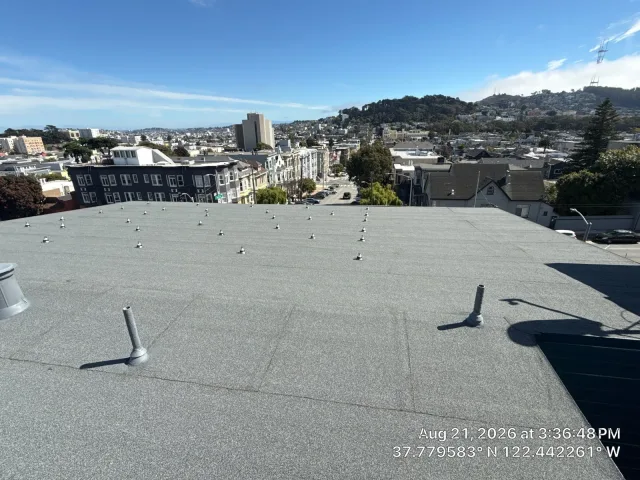
That is why Roof Express focuses on the complete roofing system, not simply the visible top layer. 3-Layer Torch-Down Flat Roof Project Completed The completed roofing system provides the property with a new multi-layer modified bitumen roof designed specifically for low-slope conditions.
The project addresses the major components required for a complete roof replacement, including preparation of the substrate, waterproofing layers, roofing membranes, penetrations, roof edges, flashing, and drainage details included within the project scope.
The final result is a clean, professionally finished flat roofing system built around multiple layers of waterproof protection. Need a Flat Roof Replacement? If your flat roof is leaking, deteriorating, holding water, or requiring repeated repairs, it may be time for a professional inspection.
Roof Express provides flat roof inspections, modified bitumen roof replacement, torch-down roofing, flashing repairs, skylight work, drainage corrections, roof-deck replacement, and complete low-slope roofing systems.
Our team can inspect the existing conditions and provide a detailed roofing proposal based on the needs of your property.
Contact Roof Express today to schedule your flat roof inspection and request an estimate for a 3-layer modified bitumen roofing system. Frequently Asked Questions About 3-Layer Torch-Down RoofingWhat is a 3-layer torch-down roof? A three-layer system typically consists of a base sheet, an intermediate modified-bitumen ply, and a finished modified-bitumen cap sheet.
The exact assembly varies by roofing manufacturer and project specification. Is torch-down roofing good for flat roofs? Modified bitumen systems are widely used for flat and low-slope roofing applications.
Whether torch application is appropriate depends on the particular building, roof conditions, safety requirements, code requirements, and manufacturer specifications. What is modified bitumen roofing? Modified bitumen is an asphalt-based roofing membrane modified with polymers and reinforced for use in roofing systems.
APP and SBS are two common modified-bitumen technologies. Why install three roofing layers? A three-ply system provides multiple layers of waterproofing protection and redundancy rather than relying exclusively on one membrane.
What is the top layer of a torch-down roof? The visible finished layer is commonly a granulated modified-bitumen cap sheet, depending on the selected roofing system. Can a torch-down roof be installed over an existing roof?
Sometimes existing conditions allow an overlay system, but a complete roof evaluation is required. Existing roofing condition, number of layers, moisture, decking, code requirements, manufacturer specifications, and roof weight must all be considered. What happens if rotten plywood is found?
Deteriorated decking should be addressed before installing the new roofing system so the membranes have a suitable substrate. Can a torch-down roof fix ponding water? Installing a new membrane does not automatically correct an existing slope or drainage problem.
Significant ponding should be evaluated separately, and drainage or slope corrections may need to be included in the project scope. Can skylights be replaced during a flat roof replacement? Yes.
Roof replacement is often a good time to replace aging skylights because the new skylight flashing and roofing system can be integrated together. Does a torch-down roof need maintenance? Yes.
Drains should remain clear, and the roofing membrane, flashing, skylights, penetrations, and drainage areas should be inspected periodically. How do I get an estimate for a 3-layer flat roof replacement?
Schedule a professional roof inspection with Roof Express. The existing roofing system, decking, drainage, flashing, penetrations, and access conditions can then be evaluated before a detailed proposal is prepared.