Flat Roof Repair: 9 Warning Signs, Best Fixes, and How to Make a Flat Roof Last Longer
Flat roofs are popular for commercial buildings and many modern homes because they’re efficient and space-saving—but they require the right maintenance. When problems show up, they can escalate quickly because water drains more slowly than on a steep-slope roof.
This guide covers the most common flat roof issues, how repairs work, and what you can do to extend your roof’s life.
Why Flat Roofs Fail (Most Common Causes)
Most flat roof problems come from a few repeat issues:
Ponding water (water sits longer than it should)
Cracked seams or failed adhesive
Damaged flashing around edges, walls, skylights, and vents
UV exposure drying and shrinking materials
Poor drainage design or clogged drains/scuppers
Foot traffic or equipment damage (especially on commercial roofs)
9 Warning Signs Your Flat Roof Needs Repair 1) Ponding water that lasts more than 48 hours
Some standing water is common after heavy rain, but if it remains for days, it can weaken seams and accelerate membrane breakdown.
2) Bubbling, blistering, or “soft” areas
Bubbles often mean moisture trapped under the membrane. If not addressed, it can spread and lead to leaks.
3) Cracks, splits, or exposed seams
Flat roof systems rely heavily on seams. Even small gaps can let water in.
4) Leaks or water stains inside
Ceiling stains, damp insulation, or dripping after storms should trigger a quick inspection—flat roof leaks can travel far from the entry point.
5) Lifting edges or loose perimeter metal
Edge details take the most wind stress. Once edges lift, water infiltration becomes much easier.
6) Flashing damage around penetrations
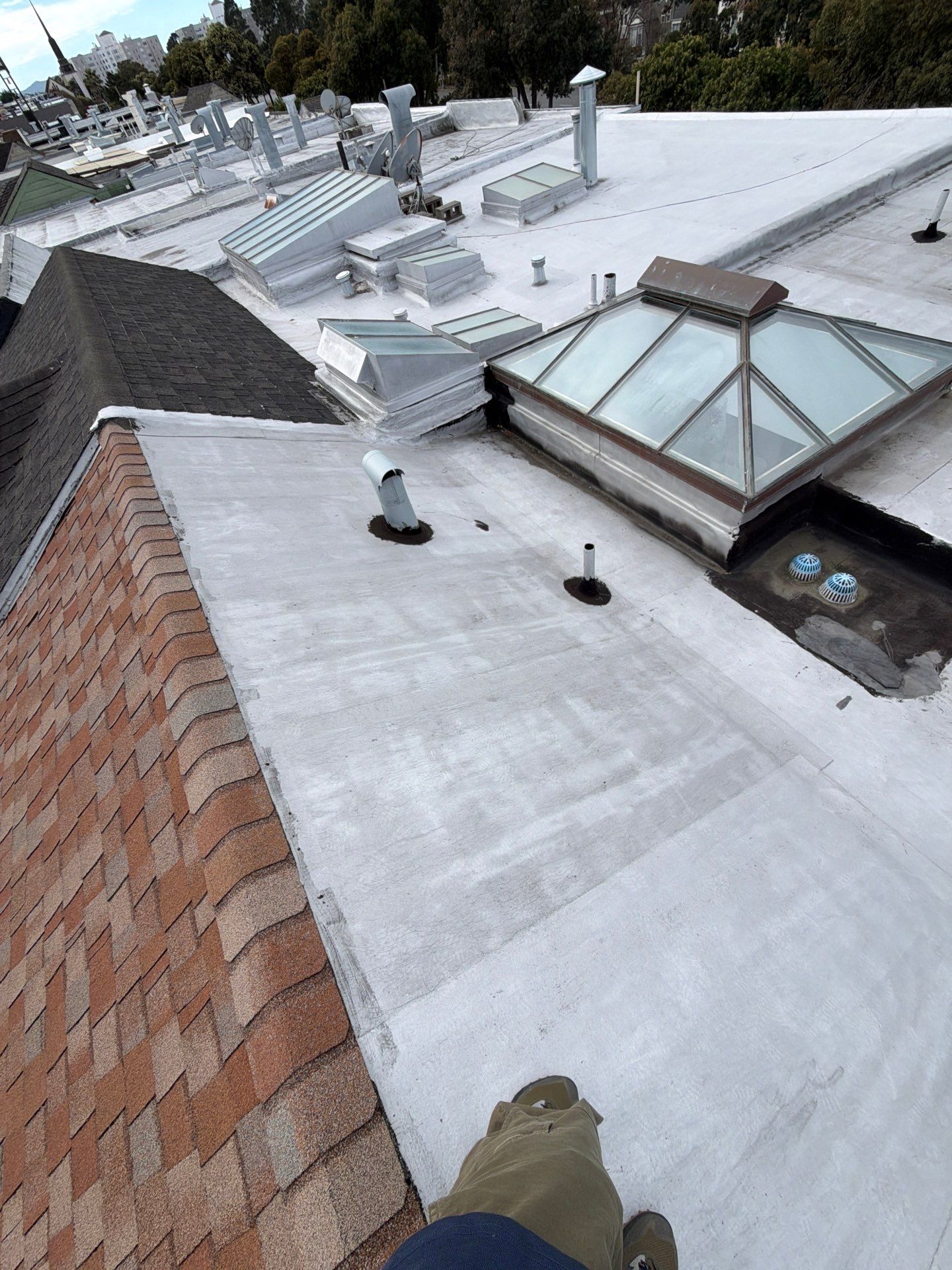
Skylights, HVAC units, vents, and parapet walls are prime leak zones. If the flashing fails, the membrane can still be fine and you’ll still leak.
7) Moldy attic smell or increased humidity
Moisture can build up without obvious dripping. Odors and humidity changes can be early warning signs.
8) Granule loss (for modified bitumen) or membrane thinning
If your roof has a granulated surface, heavy granule loss exposes the membrane to UV damage and premature aging.
9) Visible punctures or wear paths
Walkways, rooftop equipment service, and fallen branches can puncture membranes.
Flat Roof Types (and How Repairs Differ) TPO (Thermoplastic Polyolefin)
Common on commercial roofs
Repairs often involve heat-welded patches and seam reinforcement
Key failure points: seams, flashing, punctures
EPDM (Rubber Membrane)
Flexible and durable
Repairs often use primer + seam tape/patches
Key failure points: seams, adhesive failure, punctures
Modified Bitumen (Mod-Bit)
Asphalt-based with reinforcement
Repairs may use torch-down, cold-applied patch, or cap sheet repairs
Key failure points: splits, blisters, granule loss, flashing
Built-Up Roofing (BUR)
Multiple layers with gravel surface
Repairs may require cut-out and rebuild of damaged sections
Key failure points: cracks, surface wear, trapped moisture
Best Flat Roof Repair Options Spot patch repair (best for punctures and small areas)
Great when damage is localized
Fast and affordable
Must be compatible with your roof system
Seam reinforcement (best for recurring seam issues)
Adds strength to high-risk seams
Works well for TPO/EPDM when caught early
Flashing rebuild (best for leaks around edges and penetrations)
One of the most effective long-term fixes
Especially important around skylights, parapet walls, and HVAC curbs
Drainage improvement (best for ponding water)
Cleaning drains is step one
If ponding is structural, solutions can include:
Adding tapered insulation
Installing additional drains/scuppers
Reworking crickets around rooftop units
Section replacement (best when the membrane is failing in one zone)
If moisture is widespread in one area, replacing a section can prevent repeated repairs
Repair vs. Replace: When Is a Flat Roof “Too Far Gone”?
Repair is usually a good choice when:
The roof is relatively young (often under ~10–15 years depending on material)
Problems are limited to seams, flashing, or punctures
Insulation and decking are dry and structurally sound
Replacement is often the better value when:
Leaks are recurring in multiple locations
Moisture is trapped beneath large areas of membrane
The membrane is shrinking, cracking, or heavily deteriorated
You have chronic ponding and the design needs correction
How to Make a Flat Roof Last Longer (Simple Maintenance Plan)
A little maintenance makes a big difference on flat roofs:
Monthly / after storms
Clear leaves and debris from drains and scuppers
Check for new punctures or lifted edges
Twice a year
Schedule a professional inspection (spring/fall is ideal)
Reseal minor flashing gaps before they become leaks
Anytime rooftop work happens
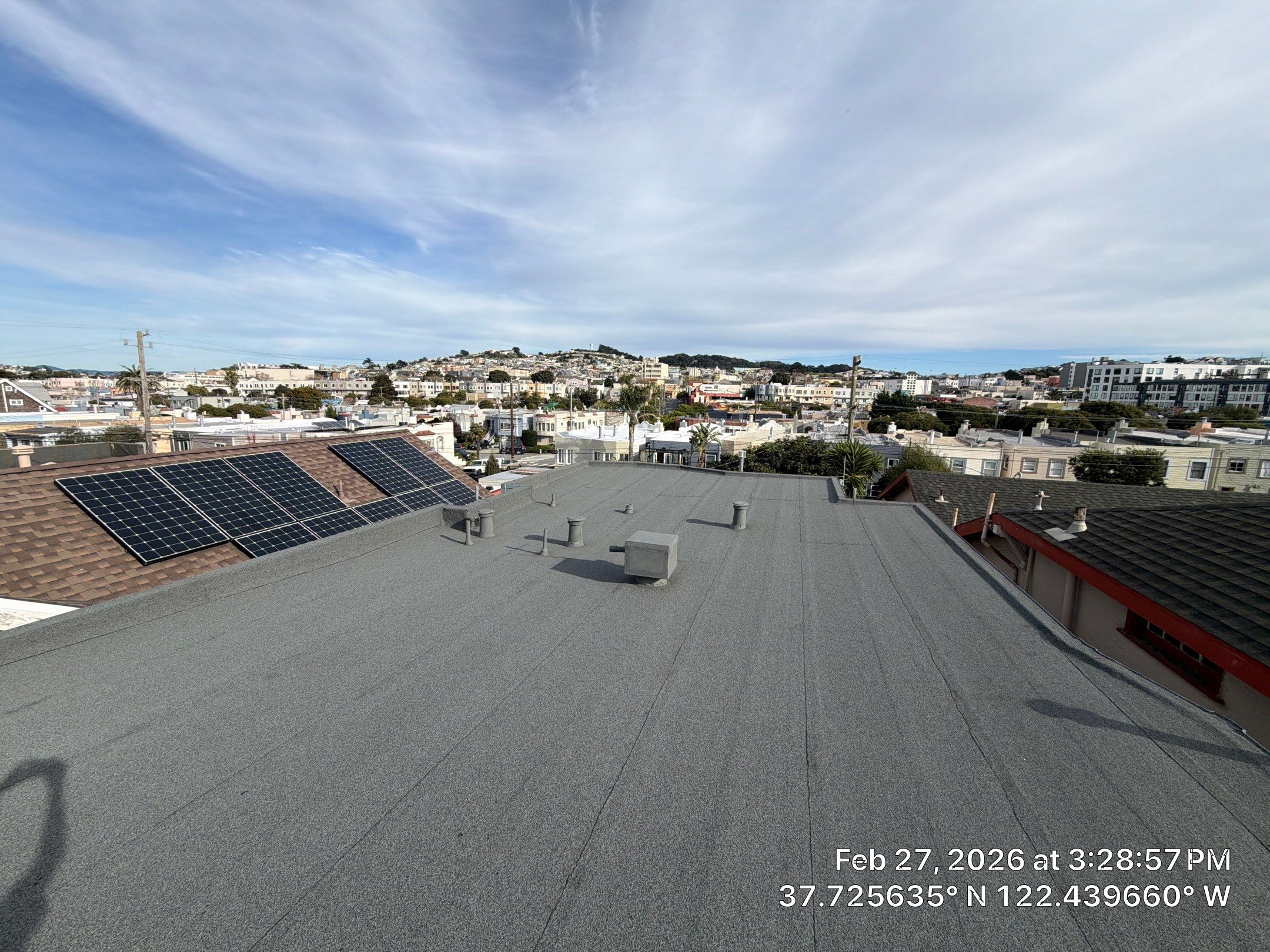
Protect the membrane during HVAC/solar/service work
Use walkway pads or designated paths for foot traffic
FAQs About Flat Roof Repair How long does a flat roof repair last?
A properly done repair can last years, but it depends on the roof’s overall condition and whether the leak source was correctly identified.
Can I patch a flat roof myself?
Small temporary patches are possible, but flat roof systems require the right materials and methods (heat-weld, seam tape, compatible adhesives). Poor patches can trap moisture and cause bigger failures.
What’s the most common flat roof leak point?
Flashing and penetrations (vents, skylights, parapet walls) are the most common sources, followed by seams and punctures.
Is ponding water always a problem?
Not always—but if it lasts more than 48 hours regularly, it increases wear and can shorten the roof’s lifespan.
Call to Action
If you’re seeing any of the warning signs above, the safest move is a flat roof inspection. A qualified roofer can confirm:
The roof type and condition
Where water is entering (and how far it’s traveling)
Whether repairs will hold—or replacement is the smarter investment
If you’re in the San Francisco area, Roof Express is a strong local choice for inspections and flat roof repair/replacement.