Ponding Water Near Roof Drains Causes, Risks, and Fixes for Flat Roof Drainage Issues (ROOF EXPRESS)
If you have a flat or low-slope roof in San Francisco, one of the most common problems is ponding water—water that sits around drains, scuppers, or low areas instead of flowing off the roof. Ponding may look harmless, but it can shorten roof life and increase leak risk fast.
This guide explains what ponding water is, why it happens, when it becomes a problem, and how ROOF EXPRESS fixes drainage issues the right way.
What Is Ponding Water?
Ponding water is standing water that remains on a flat roof after rainfall. A little moisture right after a storm is normal, but if water stays in place more than 48 hours after the rain ends, it’s usually considered ponding and needs attention.
Ponding often shows up:
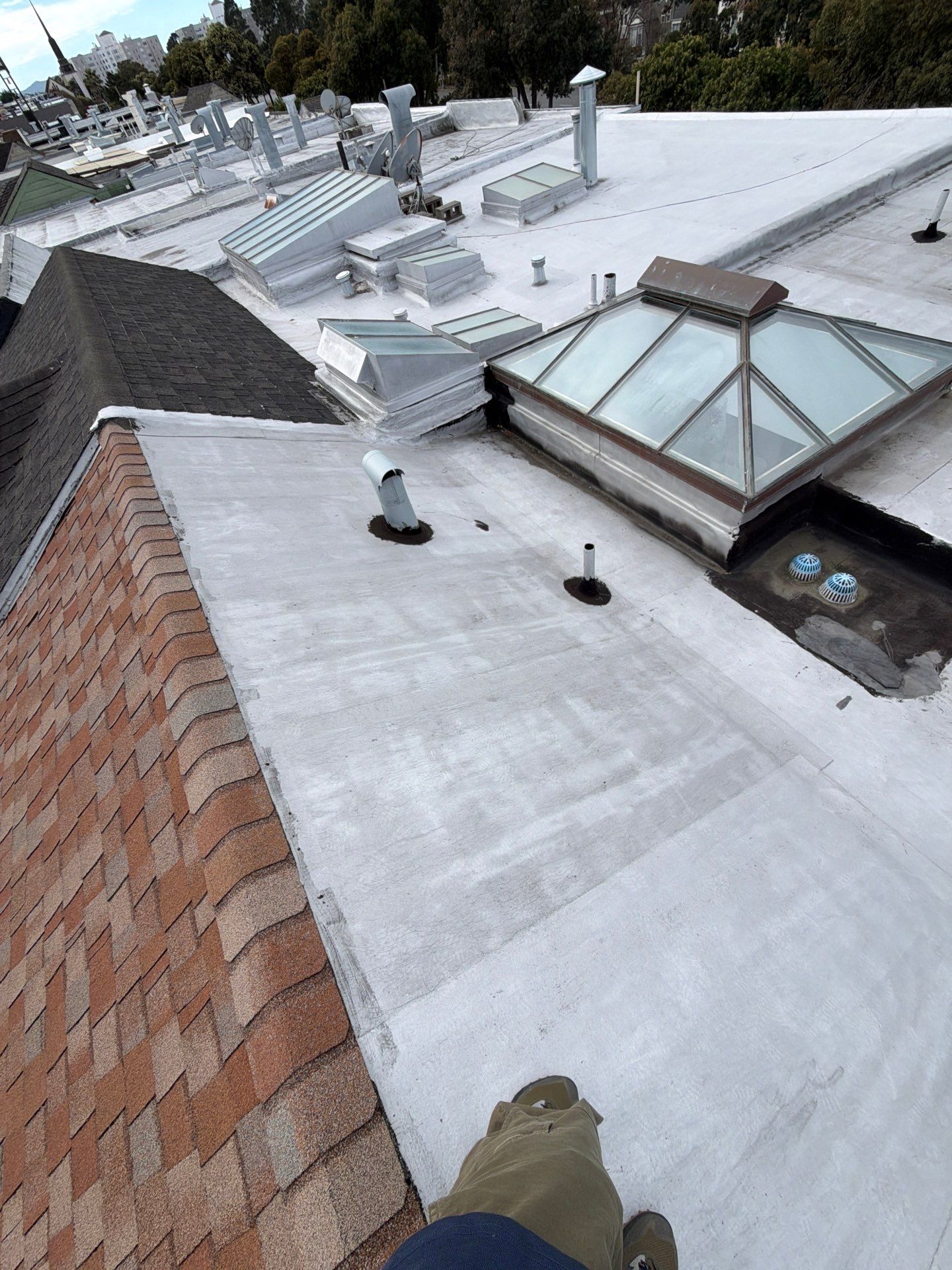
around roof drains
near scuppers
at roof-to-wall transitions
in the middle of flat roof sections
around HVAC units or skylight curbs
Why Ponding Water Happens Around Drains
Even when a drain is “there,” water may still pool if the roof isn’t directing water correctly. Common causes include:
1) Clogged drains or slow drainage
Leaves, roofing granules, and debris can partially block drains and strainers—especially in SF where wind and trees are common.
2) Improper slope (negative slope or flat spots)
Flat roofs should be built to shed water, but settling, framing movement, or poor installation can create low spots that trap water.
3) Drain bowl set too high
If the drain sits higher than the surrounding roof surface, water will pool around it instead of entering it.
4) Compacted insulation or deck deflection
Over time, the roof structure can sag slightly, creating a “dish” that holds water.
5) Poor scupper placement or blocked scuppers
On parapet roofs, scuppers must be placed and sized correctly. If not, water backs up and ponds.
Why Ponding Water Is a Serious Problem
Standing water puts constant stress on a roofing system—especially at seams, penetrations, and transitions.
Ponding water can lead to:
seam separation on modified bitumen / torch-down roofs
blistering or accelerated wear of roof materials
leaks around drains (one of the most common flat roof leak points)
algae growth and debris buildup that traps moisture
structural load issues if ponding is extensive
Even if your roof “doesn’t leak yet,” ponding water often becomes the reason it leaks later.
Warning Signs You Have a Drainage Problem
Look for these clues:
water still visible two days after rain
“dirt rings” showing the outline of a pond
wrinkles, bubbles, or lifting near seams
rusting metal edges near ponding areas
recurring leaks near the same ceiling area
wet insulation or musty smell inside
How ROOF EXPRESS Fixes Ponding Water Issues
The right fix depends on the cause. At ROOF EXPRESS, we start by identifying why water is staying there.
Drain cleaning + flow testing
We clear debris, check strainers, confirm water flows freely, and test drainage performance.
Drain repairs or drain height correction
If the drain bowl is set too high or improperly connected, we correct it so water can actually enter the drain.
Re-pitching and slope correction (crickets or tapered solutions)
If the roof has low spots, we may recommend:
adding a tapered system to improve slope
building a cricket to redirect water
targeted leveling corrections around drains
Membrane reinforcement near drains and seams
Drains and seams are high-risk areas. We reinforce transitions and repair seams with correct detailing.
Scupper improvements (parapet roofs)
If scuppers are undersized, blocked, or poorly located, we recommend adjustments to restore proper drainage.
Can Ponding Water Be “Normal” on Flat Roofs?
A small amount of water right after rain is normal. But if it’s consistent, deep, or lasting beyond 48 hours, it’s a red flag. In San Francisco’s rainy season, repeated ponding cycles can turn small weaknesses into leaks.
How to Prevent Ponding Water (Simple Maintenance)
Keep drains and scuppers clear (especially after windy days)
Trim overhanging branches that drop leaves on the roof
Schedule a yearly flat-roof inspection before rainy season
Don’t ignore “dirt rings” around drains—those are ponding water footprints
Ponding Water Near Roof Drains? Call ROOF EXPRESS
If you see standing water around your drain area or notice recurring leaks, ROOF EXPRESS can inspect your flat roof, diagnose the cause, and recommend the best fix—cleaning, repair, or slope correction.